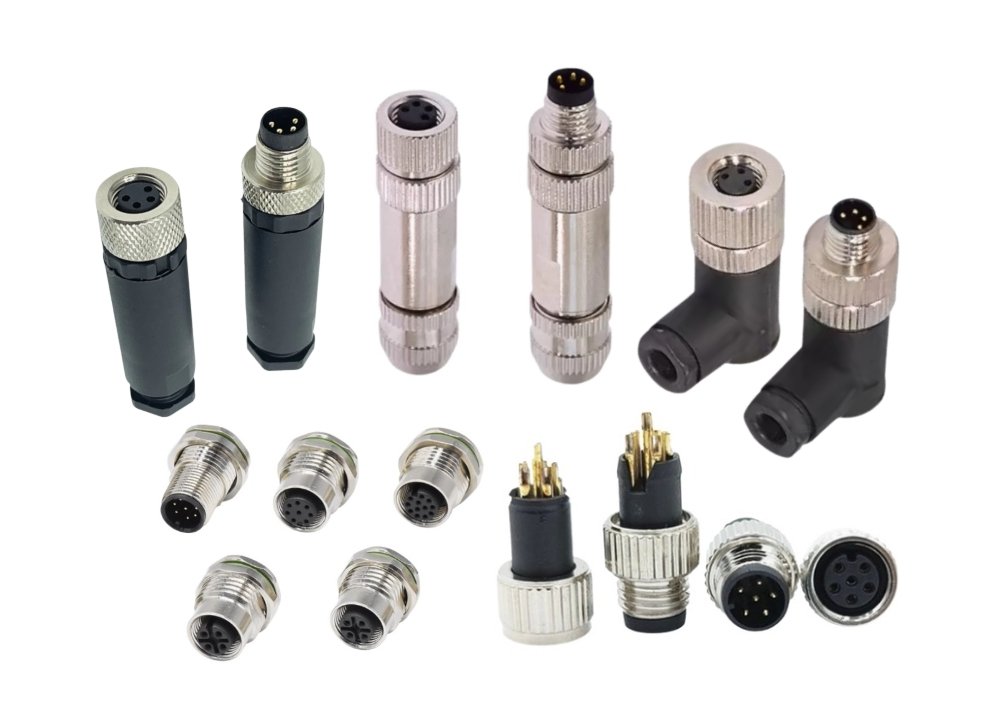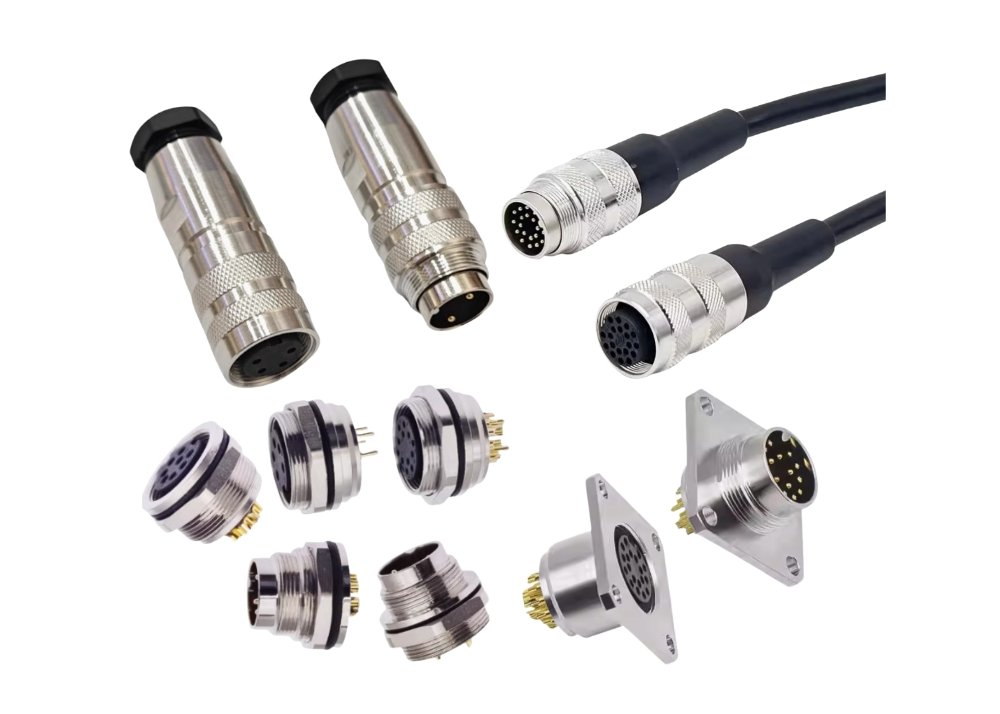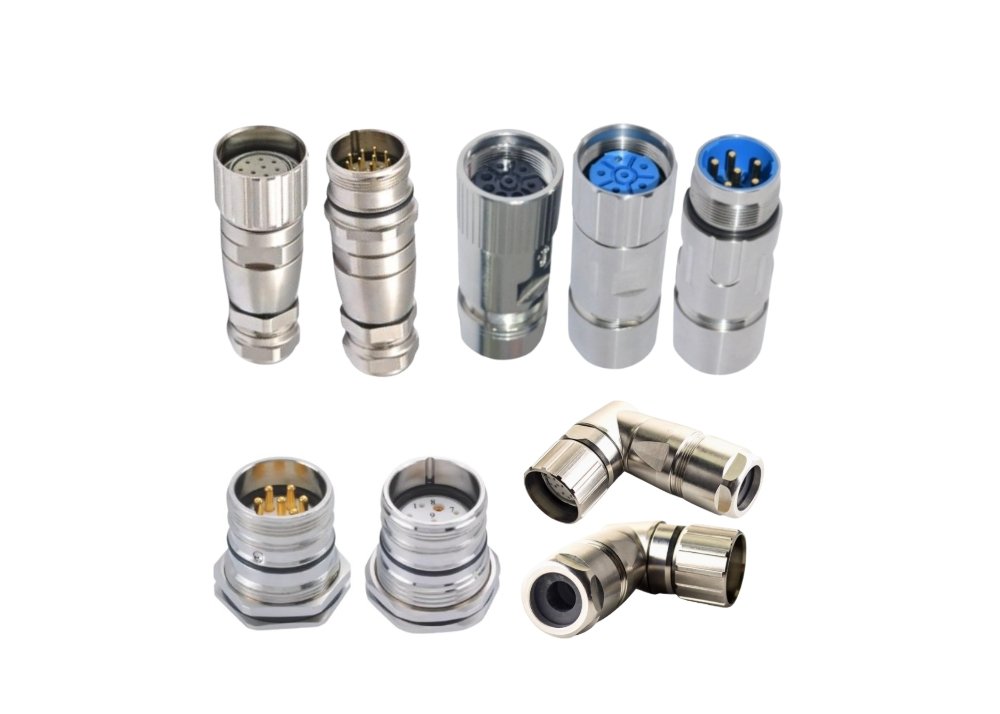
Five underwater connectors handle extreme pressure: wet-mate rubber-molded, wet-mate oil-filled (pressure-balanced), dry-mate glass-to-metal sealed, inductive (contactless), and penetrator/feedthrough designs. Their headline depth ratings span roughly 3,000 m to full-ocean-depth service in the 10,000 PSI class. Hydrostatic pressure rises about 1 bar per 10 m, so depth rating is the key spec. A connector factory builds all five as proven underwater connector technology, including the compact M8 connector and the Type B connector for space-constrained and legacy interfaces. The right pick depends on mating regime, depth, and budget. Reliability follows that match.
Wet-Mate Rubber-Molded Underwater Connectors
Pressure Rating and Depth Envelope
Typical Depth Ratings
Rubber-molded wet-mate connectors typically serve depths from 300 m to about 3,000 m. Their molded elastomer bodies tolerate the ambient pressure at those depths without a fluid compensation system. Designers rate each model by proof pressure and burst pressure, and the depth figure follows from those tests.
Pressure and Temperature Derating
Depth ratings assume a moderate water temperature. Warm water softens the elastomer and reduces pressure tolerance, so manufacturers publish derating curves. A connector rated for 3,000 m at 4 °C may only hold 2,000 m at 40 °C. Engineers should apply these curves to the actual seabed temperature before finalizing a selection.
Design Features for Extreme Pressure
Molded Elastomer Sealing
Water sealing over-molding bonds the elastomer directly to the contact insert. This process creates a continuous water sealing interface with no path for water ingress. The molded body also delivers strong corrosion resistance in salt water. A robust seal protects the contacts and supports long-term reliability in harsh underwater environments.
Isolated Contact Chambers
Each contact sits in its own sealed chamber. This isolation stops water from bridging between pins if one seal fails. The design also limits pressure-driven deformation to a small volume. These features make the connector a dependable underwater cable connector for wet-mate duty.
Typical Underwater Applications
Shallow-to-Mid-Water Subsea Systems
These connectors suit shallow-to-mid-water subsea systems. Examples include dockside power feeds, coastal monitoring arrays, and mid-depth pump stations. The molded body keeps the unit waterproof under repeated immersion. Many underwater applications in this depth band rely on this proven underwater connector technology.
ROV and Diver-Assisted Operations
ROV pilots and divers mate these connectors in open water. The rubber body tolerates rough handling and repeated mating cycles. Field teams value the simple push-and-turn coupling. Wet-mate rubber-molded designs remain a common choice among underwater electrical connectors for intervention work.
Regulatory Compliance
Industry Standards and Certifications
Rubber-molded wet-mate connectors fall under several recognized standards. IEC 60529 governs ingress protection, and most molded designs achieve an IP68 rating for continuous immersion. IEC 60884-1 and its subsea derivatives cover electrical safety and contact performance. Regional bodies add their own marks, such as CE in Europe and UL listings in North America.
Third-party test houses verify pressure ratings through hydrostatic proof and burst testing. A manufacturer submits sample units to a lab, and the lab pressurizes each unit beyond its rated depth. Certification follows only after the units pass without leakage or contact failure. Buyers should request the test report and confirm the rated depth matches the intended deployment.
Classification societies also matter for marine equipment installed on vessels or offshore platforms. DNV, ABS, and Lloyd’s Register each publish rules for subsea electrical components. A connector without the relevant class approval may fail inspection at installation. Project teams should confirm the certificate scope covers the specific model and depth rating.
Cost Considerations
Unit Cost and Field-Service Economics
Molded wet-mate connectors sit in the mid-range of underwater connectors on price. A typical unit costs less than an oil-filled pressure-balanced design and more than a basic dry-mate bulkhead fitting. Volume orders lower the per-unit figure, and standard catalog models ship faster than custom molds.
Field-service economics often outweigh the sticker price. These connectors tolerate repeated mating without seal replacement, so intervention crews spend less time on repair. A damaged cable end sometimes accepts a field-installed replacement body, which avoids a full harness swap. That serviceability supports long-term reliability on mid-depth assets.
Spare-part strategy deserves early attention. Operators should stock one or two spare bodies per harness type. A small spares inventory cuts vessel downtime when a connector fails offshore. The molded design also resists abrasion during handling, and that durability reduces replacement frequency over the asset life.
Wet-Mate Oil-Filled (Pressure-Balanced) Connectors
Pressure Rating and Deep-Water Capability
Deep-Water Depth Ratings
Oil-filled wet-mate connectors reach the deepest service bands of any wet-mate design. Standard models rate for 3,000 m to 6,000 m, and premium units carry full-ocean-depth ratings in the 10,000 PSI class. These subsea connectors serve deepwater fields where hydrostatic pressure exceeds 600 bar.
The Pressure-Balancing Principle
The internal oil stays at ambient pressure through a flexible compensator. External water pressure acts on the compensator, and the compensator transfers that load to the oil. The oil then presses equally on both sides of each seal. This balance keeps the pressure differential near zero across the sealing surfaces. The design delivers strong pressure tolerance at any depth.
Design Features for Extreme Pressure
Oil-Filled Chambers and Compensators
Each contact chamber holds dielectric oil. A rolling diaphragm or bladder compensator adjusts oil volume as depth and temperature change. The oil also displaces water at the mating interface, so contacts engage in a clean fluid medium. This architecture defines modern underwater connector technology for deep wet-mate duty.
Sealing Through Repeated Mating Cycles
The oil film lubricates the seal faces during each mate and de-mate. Seal wear drops, and the connector holds its rating across hundreds of cycles. Field crews can re-mate these underwater electrical connectors without seal replacement. That durability supports reliability on long-life assets.
Typical Underwater Applications
Deepwater Oil and Gas
Deepwater oil and gas projects form the core market. Trees, manifolds, and jumpers use these connectors for power and signal distribution. The oil-filled body resists corrosion resistance challenges in salt water and produced fluids. These units also stay waterproof under demanding underwater conditions.
Subsea Production Control Systems
Subsea production control systems depend on wet-mate oil-filled links. Flying leads connect control modules to the tree, and ROVs mate the connectors on the seabed. The balanced design tolerates the pressure swings of startup and shutdown. These underwater applications demand high cycle life, and this class delivers it.
Regulatory Compliance
Offshore Standards and Type Approvals
Oil-filled wet-mate connectors must satisfy a demanding set of offshore standards before they enter deepwater service. API 17E and ISO 13628-5 govern subsea production control umbilicals and the electrical connectors inside them. These documents define design validation, qualification testing, and documentation requirements. A manufacturer submits sample units for hyperbaric chamber testing at rated depth, plus thermal cycling and insulation resistance checks. Type approval follows only after every unit passes without leakage or electrical fault.
Classification societies add a second layer of oversight. DNV, ABS, and Lloyd’s Register each publish rules for subsea electrical equipment, and operators typically require at least one class certificate per connector model. The certificate scope must cover the exact model, depth rating, and mating regime. A generic approval does not transfer to a different pressure-balanced design. Project teams should verify the certificate number against the manufacturer’s declaration before installation.
Cost Considerations
Premium Pricing and Lifecycle Value
Oil-filled pressure-balanced connectors carry the highest unit price among wet-mate underwater connectors. The compensator assembly, dielectric oil fill, and precision seal stack drive manufacturing cost well above molded rubber designs. A single unit can cost several times a comparable rubber-molded connector. Custom configurations and full-ocean-depth ratings push the figure higher still.
Lifecycle value often justifies the premium. These connectors survive hundreds of mating cycles without seal replacement, and that durability protects reliability on long-life subsea assets. A failed connector on a deepwater tree triggers a costly intervention vessel mobilization. The price gap between a premium connector and a cheaper alternative shrinks against that intervention cost. Operators should weigh the upfront premium against the avoided downtime over a ten- to twenty-year field life.
Spares and service logistics also shape the total cost. Oil-filled units require trained technicians for field repair, and some repairs must return to the factory. A modest spares holding and a clear service agreement reduce risk. Buyers should confirm lead times for replacement units before finalizing the purchase order.
Dry-Mate Glass-to-Metal Sealed Connectors
Pressure Rating and Hermetic Performance
High-Pressure Depth Ratings
Dry-mate glass-to-metal sealed connectors rate for some of the highest pressures among dry-mate designs. Standard models reach 6,000 m, and premium units carry full-ocean-depth ratings in the 10,000 PSI class. These underwater connectors suit bulkhead mounting where the mating happens before submersion. The depth rating depends on the glass seal quality and the shell thickness.
Hermetic Seal Integrity
The glass-to-metal bond creates a true hermetic barrier. Helium leak testing verifies each unit to rates below 1 × 10⁻⁹ atm·cc/sec. This integrity keeps water and gas out of the contact chamber for the life of the installation. A hermetic seal also protects the contacts from condensation during transport and storage.
Design Features for Extreme Pressure
Glass-to-Metal Hermetic Sealing
Molten glass fuses to the metal shell and pins during manufacture. The glass forms a compression seal as it cools, and that compression holds the seal tight under external pressure. This construction defines proven underwater connector technology for dry-mate duty. The glass also provides electrical insulation between adjacent contacts.
Rugged Shell and Contact Retention
A machined metal shell surrounds the glass insert and absorbs mechanical loads. Stainless steel or titanium shells deliver strong corrosion resistance in salt water. Each pin locks into the glass with a defined insertion force, so contacts stay fixed under vibration. The rugged body keeps the unit waterproof at rated depth.
Typical Underwater Applications
Subsea Instrumentation and Sensors
Subsea instruments use these connectors for sensor housings and data loggers. The hermetic seal protects sensitive electronics from moisture. Many underwater applications in oceanographic research rely on this design. The connector also tolerates the pressure cycling of repeated deployments.
Pressure Vessel and Housing Penetration
Pressure vessels need a sealed path for power and signal cables. A glass-to-metal bulkhead connector provides that path without compromising the hull. The design supports long-term reliability on manned and unmanned submersibles. Installation crews mount the connector before the vessel sees service.
Regulatory Compliance
Hermeticity and Environmental Standards
Hermeticity testing follows recognized standards. MIL-STD-883 Method 1014 defines the fine and gross leak tests that most manufacturers use. A unit passes when helium leakage stays below the specified rate. IEC 60068 provides the environmental test sequence for temperature cycling, humidity, and salt mist. These tests confirm the seal holds through the conditions a subsea installation meets.
Ingress protection ratings add another layer. Most glass-to-metal designs achieve IP68 under IEC 60529. Marine equipment on vessels or platforms may also need class approval from DNV, ABS, or Lloyd’s Register. Buyers should confirm the certificate covers the exact model and depth rating. A test report alone does not replace a class certificate for regulated installations.
Cost Considerations
Cost Profile and Where It Fits
Glass-to-metal sealed connectors occupy a middle price band among underwater connectors. A standard bulkhead unit costs more than a molded rubber wet-mate body but less than an oil-filled pressure-balanced design. The glass fusion process needs tight process control, and that control drives the price above simple elastomer seals. Volume orders and standard catalog models reduce the per-unit figure.
The cost profile fits dry-mate installations best. A project that mates the connector once, before submersion, gains little from a wet-mate design. The hermetic seal then protects electronics for years without service. That long service life supports reliability on sensor housings and pressure vessels. Field repair is rare, and most units stay in place for the full asset life.
Custom shells in titanium raise the price further. A project should specify titanium only when weight or corrosion demands it. Stainless steel covers most subsea instrumentation needs at a lower cost. Buyers should also budget for the mating half and the cable assembly, since the bulkhead unit alone does not complete the link.
Inductive (Contactless) Connectors

Pressure Rating and Depth Options
Deep-Water and Full-Ocean-Depth Ratings
Inductive connectors reach full-ocean-depth service. Standard models rate for 6,000 m, and premium units carry ratings in the 10,000 PSI class for trenches and abyssal deployments. These underwater connectors suit the deepest survey and research programs.
Why Coupling Is Pressure-Insensitive
Power and data cross a magnetic field, not a metal contact. No pin penetrates the housing, so external pressure has no path to the electronics. The housing simply compresses under load, and the coupling gap stays fixed. Depth therefore changes little in performance.
Design Features for Extreme Pressure
Magnetically Coupled Power and Data
A primary coil in one half induces current in a secondary coil in the other half. The pair transfers power across a sealed wall and modulates data onto the same field. This architecture defines modern underwater connector technology for contact-free links. Operators gain reliable signal and power transmission without exposed metal.
Fully Encapsulated, Contact-Free Interfaces
Each half sits inside a solid, waterproof encapsulation. The smooth faces wipe clean during mating and resist marine growth. No cavity fills with water, and no seal wears against a moving pin. The design supports underwater communication and power systems that demand long service intervals.
Typical Underwater Applications
Subsea Sensors and Monitoring
Inductive units serve subsea sensor nodes and monitoring packages. A sealed face tolerates repeated connection in turbid water. Research teams value the design for long-term reliability on cabled observatories.
Battery and Docking Systems for AUVs
Autonomous underwater vehicles dock and recharge through inductive couplings. The vehicle settles into a cradle, and power flows across the sealed interface. No wet pin carries current, so corrosion risk drops. This approach supports underwater communication and data offload during each dock visit.
Regulatory Compliance
Subsea and EMC Standards
Inductive connectors must satisfy both subsea equipment rules and electromagnetic compatibility (EMC) requirements. API 17E and ISO 13628-5 cover subsea production control equipment, and these documents define qualification testing for pressure and temperature cycling. Classification societies such as DNV, ABS, and Lloyd’s Register publish additional rules for subsea electrical components. Operators typically require at least one class certificate per model, and the certificate scope must match the exact depth rating and application.
EMC standards add a separate layer of testing. IEC 61000-4 governs immunity to radiated and conducted disturbances, and IEC 61000-6-2 sets immunity levels for industrial environments. Marine installations often follow EN 61326-1 for measurement and control equipment. A magnetically coupled design radiates a small field by nature, so manufacturers test each unit for emissions and immunity. Buyers should request the EMC test report alongside the pressure qualification certificate. A unit that passes pressure testing but fails EMC limits can disrupt nearby sensors and communication links.
Cost Considerations
Higher Upfront Cost, Lower Wear Costs
Inductive connectors carry a higher unit price than most contact-based underwater connectors. The coil assemblies, encapsulation process, and power electronics drive manufacturing cost upward. A single unit can cost several times a comparable wet-mate rubber-molded design. Custom housings and full-ocean-depth ratings push the figure higher still.
The wear economics tell a different story. No metal contact touches water, so no pin corrodes and no seal wears against a moving surface. Mating cycles cause almost no mechanical degradation. Field crews never replace contact pins, and seal replacement intervals stretch far beyond those of contact-based designs. That durability protects reliability across a long service life.
Maintenance logistics also favor the contactless design. A smooth, encapsulated face wipes clean during mating, and marine growth has little surface to grip. Service teams spend less time on cleaning and inspection. The avoided intervention cost offsets much of the upfront premium over a ten-year field life. Project teams should weigh the purchase price against the total cost of ownership, not the sticker price alone.
Penetrator and Feedthrough Connectors
Pressure Rating and Bulkhead Performance
High-Pressure Bulkhead Ratings
Penetrator and feedthrough connectors pass power and signal through a pressure boundary. Standard bulkhead units rate for 3,000 m to 6,000 m. Premium designs reach full-ocean-depth service in the 10,000 PSI class. The bulkhead mount carries the full pressure differential, so the shell and seal stack define the rating.
Depth Rating by Seal Type
The seal type sets the depth envelope. Elastomer O-rings serve mid-depth work well. Metal-to-metal seals and glass-to-metal seals extend the range to full ocean depth. Each seal type trades cost against pressure tolerance, and engineers should match the seal to the rated depth.
Design Features for Extreme Pressure
Bulkhead Sealing Designs
A penetrator uses a threaded body, a shoulder, and a compression seal. The body clamps against the hull wall, and the seal compresses as the nut tightens. Dual O-ring designs add a backup barrier. These features keep the unit waterproof under full differential pressure. A stainless steel connector body delivers strong corrosion resistance in salt water.
Termination and Strain Relief
Field termination demands care at the pressure boundary. A potted backshell seals the cable jacket to the connector body. Strain relief hardware carries cable tension away from the pins. Proper termination protects reliability across years of service in harsh underwater environments.
Typical Underwater Applications
Pressure Hull and Vessel Penetrations
Submersibles and pressure vessels need sealed cable paths. A penetrator provides that path without weakening the hull. Manned submersibles, AUV housings, and instrument pressure cases all rely on this approach. These underwater connectors suit any hull that must stay dry inside.
Subsea Enclosures and Junction Boxes
Junction boxes and subsea enclosures use feedthrough connectors to route cables through walls. The bulkhead mount keeps the interior dry and the contacts isolated. These subsea connectors serve distribution and monitoring duties across many underwater connector technology platforms.
Regulatory Compliance
Pressure-Vessel and Marine Standards
Penetrator and feedthrough connectors sit on a pressure boundary, so they fall under pressure-vessel rules as well as marine electrical standards. Manned submersibles and human-occupied pressure hulls follow ASME PVHO-1, which sets design and testing requirements for viewports and hull penetrations. Unmanned pressure housings often follow ASME Section VIII or the equivalent rules a classification society publishes. These documents define proof testing, design margins, and documentation for each penetration.
Classification societies add a second layer. DNV, ABS, and Lloyd’s Register each publish rules for marine equipment, and these rules cover hull penetrations on vessels and offshore units. A certificate must name the exact model, seal type, and depth rating. Buyers should confirm the certificate scope before installation, because a generic approval does not transfer to a different seal design.
Ingress protection and environmental testing round out the compliance picture. Most penetrators achieve IP68 under IEC 60529, and IEC 60068 covers temperature cycling, humidity, and salt mist. A test report supports the rating, and a class certificate supports regulated installations. Project teams should hold both documents for underwater connectors that cross a pressure boundary.
Cost Considerations
Budget Fit and Sourcing Options
Penetrators and feedthroughs occupy a wide price band. A standard elastomer-sealed bulkhead unit costs less than an oil-filled wet-mate connector, and a glass-to-metal or metal-to-metal full-ocean-depth design costs more. The seal type drives most of the price difference, and the shell material adds a second variable. Stainless steel covers most mid-depth work, and titanium suits weight-sensitive or highly corrosive service.
Sourcing options shape the budget further. Catalog models ship quickly and cost less than custom shells. A project with a standard hull wall thickness can often use an off-the-shelf unit. Custom thread sizes, angled bodies, and potted cable assemblies raise the price and extend lead times. Buyers should confirm the mating half and cable assembly costs, since the bulkhead unit alone does not complete the link.
Lifecycle cost favors a careful seal choice. A well-matched seal protects reliability across the full asset life, and field replacement is rare on a properly installed penetrator. Spares holding stays small, and service teams rarely need factory returns. That low maintenance burden offsets much of the upfront price difference between seal types.
Comparison Table: Key Specs at a Glance
Pressure Ratings Side by Side
The five connector classes span a wide depth envelope. The table below summarizes typical and premium ratings for each design.
| Connector Type | Typical Depth Rating | Premium Rating | Pressure Class |
|---|---|---|---|
| Wet-mate rubber-molded | 300–3,000 m | ~3,000 m | Mid-pressure |
| Wet-mate oil-filled (pressure-balanced) | 3,000–6,000 m | Full ocean depth | 10,000 PSI class |
| Dry-mate glass-to-metal sealed | Up to 6,000 m | Full ocean depth | 10,000 PSI class |
| Inductive (contactless) | Up to 6,000 m | Full ocean depth | 10,000 PSI class |
| Penetrator/feedthrough | 3,000–6,000 m | Full ocean depth | 10,000 PSI class |
Rubber-molded units serve the shallow-to-mid band. The other four classes reach full-ocean-depth service when buyers specify premium seals and shells.
Mating Regime and Feature Comparison
Mating regime separates the classes as sharply as depth does. Wet-mate designs mate and de-mate underwater. Dry-mate and penetrator designs mate before submersion. Inductive units mate in water but carry no exposed contacts.
| Connector Type | Mating Regime | Key Pressure Feature | Cycle Life |
|---|---|---|---|
| Wet-mate rubber-molded | Wet-mate | Molded elastomer seal, isolated chambers | High |
| Wet-mate oil-filled | Wet-mate | Oil-filled chambers, compensator | Very high |
| Dry-mate glass-to-metal | Dry-mate | Hermetic glass-to-metal seal | Single mate |
| Inductive | Wet-mate, contactless | Encapsulated magnetic coupling | Very high |
| Penetrator/feedthrough | Dry-mate bulkhead | Compression seal stack | Single install |
Corrosion resistance and high-pressure tolerance vary by shell material and seal type. Titanium shells and metal-to-metal seals extend service life in the deepest bands.
Compliance and Cost Snapshot
Compliance requirements track the application, not just the connector. Cost tracks the sealing technology and the mating mechanism.
| Connector Type | Key Standards | Relative Unit Cost |
|---|---|---|
| Wet-mate rubber-molded | IEC 60529, IEC 60884-1, class society rules | Mid |
| Wet-mate oil-filled | API 17E, ISO 13628-5, class society rules | Highest |
| Dry-mate glass-to-metal | MIL-STD-883, IEC 60068, IP68 | Mid |
| Inductive | API 17E, IEC 61000 EMC series | High |
| Penetrator/feedthrough | ASME PVHO-1, ASME VIII, IP68 | Wide band |
Every class needs a class certificate for regulated installations. Connector performance depends on matching the certificate scope to the exact model and depth rating. Buyers should weigh unit price against lifecycle cost, because the cheapest unit rarely delivers the lowest total cost of ownership.
How to Choose the Right Underwater Connector Technology
Match Depth Rating to Operating Pressure
Depth rating drives every other decision. Hydrostatic pressure climbs about 1 bar per 10 m of seawater, so a 3,000 m deployment sees roughly 300 bar. Engineers should convert the target depth into a pressure figure first. Then they compare that figure against the published rating, not against a marketing depth claim.
A safety margin protects connector reliability over the asset life. Most project teams apply a margin of 1.25 to 1.5 times the maximum operating pressure. The margin covers pressure surges, temperature derating, and long-term seal aging. A connector rated at exactly the working depth leaves no room for these effects.
Temperature changes the envelope. Warm water softens elastomer seals and lowers pressure tolerance. Manufacturers publish derating curves for this reason. Buyers should apply the curve for the actual seabed temperature before they lock in a model.
Decide Between Wet-Mate and Dry-Mate
The mating regime follows from the maintenance plan. Wet-mate designs mate and de-mate underwater, so ROVs and divers can swap modules without recovering the asset. Dry-mate designs mate once on deck, before submersion. A project that never reconnects in water gains little from a wet-mate mechanism.
Inductive units sit between the two camps. They mate in water but carry no exposed contacts. That contactless interface suits docking stations and battery charging, where repeated connection is routine.
Cycle count matters here. A wet-mate connector that sees hundreds of mate cycles needs a robust seal stack and a proven oil or elastomer system. A bulkhead penetrator that mates once needs a hermetic barrier and a solid termination. Matching the mechanism to the actual duty cycle keeps connector performance predictable.
Confirm Compliance and Certification Needs
Regulated installations need more than a test report. Classification societies such as DNV, ABS, and Lloyd’s Register publish rules for subsea electrical equipment. Operators typically require at least one class certificate per model. The certificate scope must name the exact model, depth rating, and mating regime.
Application standards add a second layer. API 17E and ISO 13628-5 cover subsea production control equipment. ASME PVHO-1 governs hull penetrations on manned submersibles. EMC standards apply to inductive designs. Project teams should collect the pressure qualification report, the class certificate, and the relevant application approvals before installation. A missing document can stall a commissioning schedule.
Weigh Cost Against Lifecycle and Maintenance
Purchase price tells only part of the cost story. A buyer should compare the total cost of ownership across the asset life. That figure includes the unit price, installation labor, spares holding, and intervention cost.
Wet-mate oil-filled designs carry the highest sticker price. Their long cycle life and low seal wear offset much of that premium. A failed unit on a deepwater tree triggers a costly vessel mobilization. That risk makes the premium easy to justify.
Rubber-molded wet-mate units cost less upfront. They also tolerate repeated mating without seal replacement. Field teams can swap a damaged body without a full harness change. That serviceability keeps maintenance cost low on mid-depth assets.
Dry-mate glass-to-metal and penetrator designs mate once. They need no wet-mate mechanism, so the unit price drops. Field repair is rare on a properly installed unit. A small spares holding covers most needs.
Inductive connectors cost more upfront. They wear almost nothing across mating cycles. Service teams spend less time on cleaning and inspection. The avoided intervention cost offsets the premium over a ten-year field life.
A simple rule helps here. Match the connector class to the duty cycle first. Then compare lifecycle cost across the shortlisted models. The cheapest unit rarely delivers the lowest total cost.
Check Application Fit and Environment
The operating environment shapes the final choice. Salt water demands strong corrosion resistance. Titanium or stainless steel shells cover most subsea needs. Produced fluids and marine growth add further demands.
Temperature affects seal performance. Warm water softens elastomer seals and lowers pressure tolerance. Engineers should apply the manufacturer’s derating curve for the actual seabed temperature.
Mating frequency matters too. ROV intervention suits wet-mate designs. A one-time hull penetration suits a dry-mate bulkhead unit. Contactless inductive units fit docking and charging stations.
Space and interface constraints narrow the field. Compact formats such as the M8 connector serve tight enclosures. Legacy interfaces may call for a Type B connector. Buyers should confirm the mating half and cable assembly before ordering.
Finally, project teams should verify the certificate scope. The class certificate must name the exact model, depth rating, and mating regime. A generic approval does not transfer to a different design. That check protects underwater connectors from a commissioning delay.
Waterproof Power Connector Solutions and Underwater Wire Connectors
Ingress Protection Ratings That Matter
The IP code tells buyers how well a connector resists water ingress protection. IEC 60529 defines the two digits. The first digit covers solids, and the second digit covers liquids. A rating of IP68 means the unit survives continuous immersion under agreed conditions. IP67 covers temporary immersion, and IP66 handles powerful jets.
Depth ratings and IP codes answer different questions. An IP68 mark alone does not prove a 6,000 m rating. Buyers should read the test conditions behind each mark. A connector that passes IP68 at one meter may fail at 300 bar. Project teams should pair the IP rating with a hydrostatic proof report for any deep deployment.
Matching Cable Assemblies to Connector Types
A cable assembly carries the same pressure load as the connector body. The jacket material, the potted backshell, and the strain relief all affect reliability. Molded rubber bodies pair best with molded cable jackets. Oil-filled wet-mate units need factory-terminated leads or trained field termination. Glass-to-metal bulkheads accept potted backshells that seal the jacket to the shell.
Buyers should confirm the mating half and the cable assembly together. A bulkhead unit alone does not complete the link. The cable assembly also sets the bend radius and the tension limit. A mismatched assembly can pull the pins loose under load.
Where Each Solution Fits Best
Each class serves a distinct duty. Rubber-molded wet-mate units fit mid-depth intervention work. Oil-filled designs serve deepwater trees and control systems. Glass-to-metal bulkheads protect sensor housings and pressure vessels. Inductive units suit docking and charging stations. Penetrators route cables through hulls and junction boxes.
These waterproof power connector solutions also support underwater communication and power systems across all five classes. Compact formats such as the M8 connector serve tight enclosures, and legacy Type B interfaces remain available. Every underwater cable connector in this group needs a certificate that names the exact model and depth rating.
The final check covers the whole link. Underwater cables and connectors must match in jacket material, termination method, and pressure rating. A strong underwater cable connectors selection pairs the right body with the right assembly. Teams that verify waterproof ratings, mating regime, and certificate scope avoid commissioning delays. These underwater wire connectors then deliver dependable service at depth. Properly matched underwater wire connectors protect reliability for the full asset life, and well-documented underwater wire connectors simplify inspection at every stage.
Five connector classes serve extreme-pressure work. Wet-mate rubber-molded units offer simple, rugged sealing. Oil-filled pressure-balanced designs deliver deep-water cycle life. Glass-to-metal sealed connectors provide hermetic protection. Inductive units remove contact wear entirely. Penetrators carry cables through pressure boundaries. Depth rating, mating regime, compliance, and lifecycle cost drive every selection among underwater connectors. Teams should match the connector class to depth and mating needs first. Cost optimization comes second. That sequence builds reliable underwater systems at any depth.
FAQ
How Does Depth Translate to Pressure on a Connector?
Hydrostatic pressure rises about 1 bar per 10 m of seawater. A 3,000 m deployment therefore sees roughly 300 bar, or about 4,350 PSI. Engineers convert target depth into a pressure figure first. They then compare that figure against the published rating with a safety margin.
When Should a Project Choose Wet-Mate Over Dry-Mate?
The maintenance plan decides this question. Wet-mate designs mate and de-mate underwater, so ROVs and divers can swap modules without recovering the asset. Dry-mate designs mate once on deck before submersion. A project that never reconnects in water gains little from a wet-mate mechanism.
Does an IP68 Rating Guarantee a Deep-Water Rating?
No. IEC 60529 defines IP68 as continuous immersion under agreed test conditions. The mark alone does not prove a 6,000 m rating. A connector that passes IP68 at one meter may fail at 300 bar. Buyers should pair the IP rating with a hydrostatic proof report.
What Limits Inductive Connectors at Extreme Depth?
Very little limits them. Power and data cross a magnetic field, not a metal contact. No pin penetrates the housing, so external pressure has no path to the electronics. The housing compresses under load, and the coupling gap stays fixed. Performance changes little with depth.
Which Seal Type Suits Full-Ocean-Depth Penetrators?
The seal type sets the depth envelope. Elastomer O-rings serve mid-depth work well. Metal-to-metal seals and glass-to-metal seals extend the range to full ocean depth. Engineers should match the seal to the rated depth and weigh the cost difference.
What Drives the Price Gap Between Connector Classes?
Sealing technology and mating mechanism drive most of the price. Oil-filled pressure-balanced designs carry the highest unit price because of the compensator assembly and precision seal stack. Molded rubber wet-mate units cost less. Inductive units sit high upfront but wear almost nothing across mating cycles.
How Much Safety Margin Should a Depth Rating Include?
Most project teams apply a margin of 1.25 to 1.5 times the maximum operating pressure. The margin covers pressure surges, temperature derating, and long-term seal aging. A connector rated at exactly the working depth leaves no room for these effects.
Do Regulated Installations Need More Than a Test Report?
Yes. Classification societies such as DNV, ABS, and Lloyd’s Register publish rules for subsea electrical equipment. Operators typically require at least one class certificate per model. The certificate scope must name the exact model, depth rating, and mating regime. A generic approval does not transfer to a different design.